 ← All insights
Why the number is usually guessed
Most exhibitors arrive at a stand size one of three ways: what they took last year, what the organiser offered, or what a competitor booked. None of those is a brief. Each produces a number that is defensible in a meeting and disconnected from what the stand is being asked to achieve.
The cost of guessing high is obvious and survivable — you pay for space you do not fill. The cost of guessing low is the one that hurts, because it surfaces late. The stand is designed, the drawings are approved, and only when the meeting schedule is built does it become clear there is nowhere to hold the meetings.
Beauty Sky has delivered stands between 40 m² and 1,200 m², with 24 projects in the published record carrying a verified area. What follows is what those brackets actually supported.
Under 100 m²: one job, done properly
Below 100 m² the stand can do one thing well. Choosing which is the whole design problem, and stands at this size fail when they try to be a product display, a demonstration area and a hospitality lounge at once.
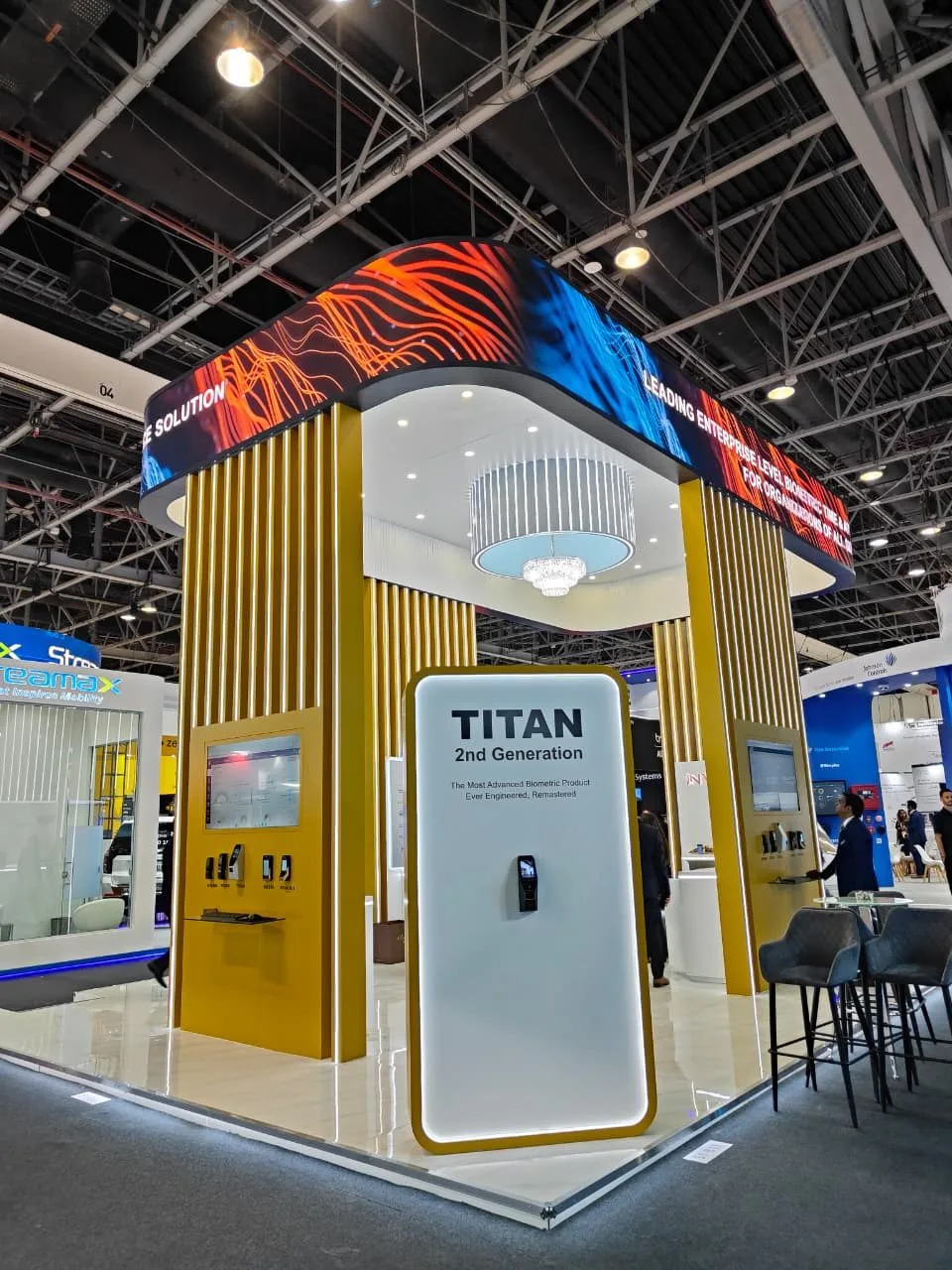
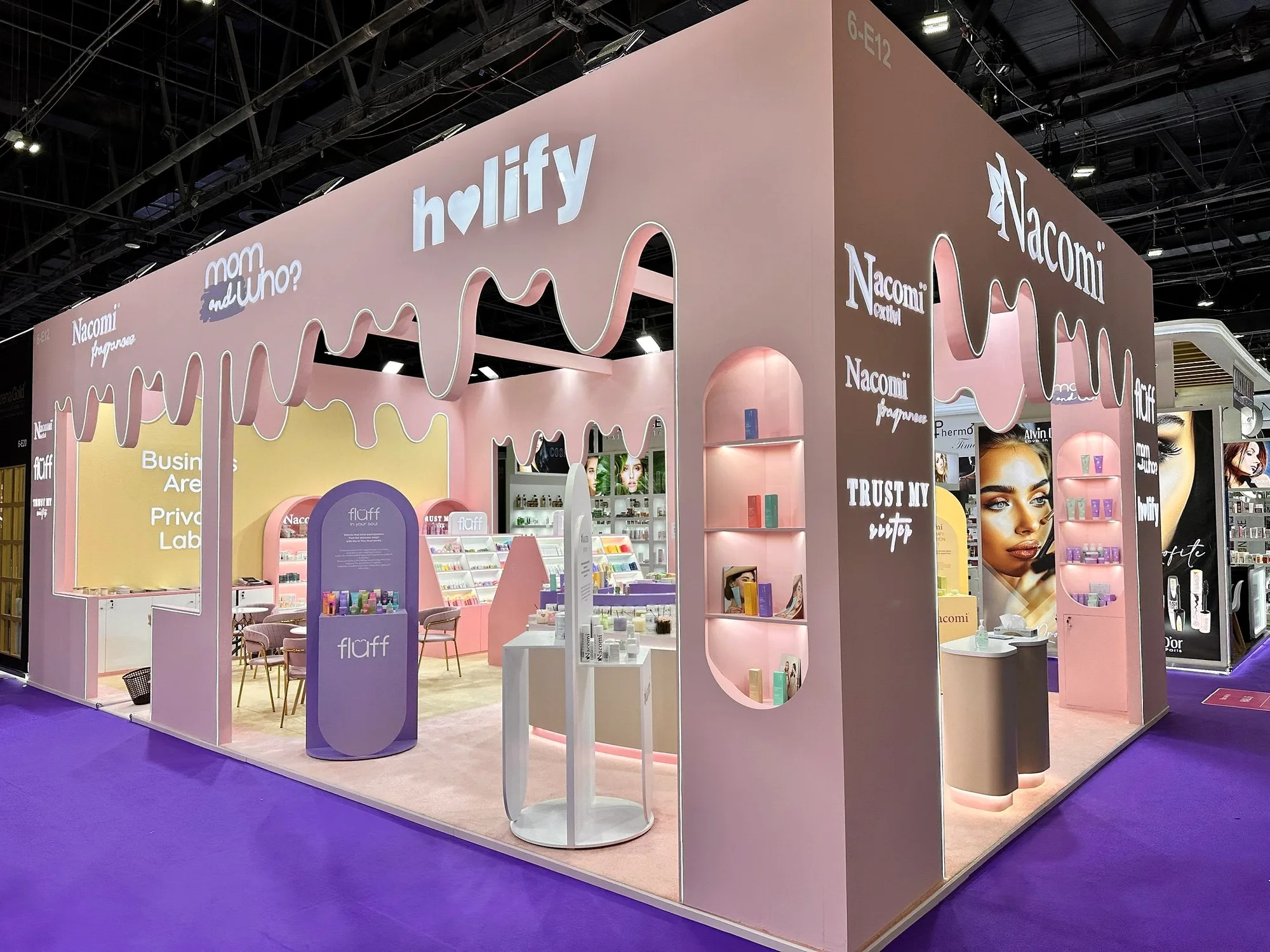
Invixium at Intersec 2026 took 90 m² and spent it on demonstration — making a technical biometric portfolio tangible enough to explore and discuss in person. Nacomi at Beautyworld 2024 took the same 90 m² and spent it differently, bringing four brands together as a single tactile destination with room for private-label conversations.
Both work because each picked a primary job. Perm Region has run ADIPEC three years at 70, 80 and 90 m², which is the other thing this bracket is good for: holding a consistent presence at a show year after year without a headline budget.
What this bracket does not support is a private meeting room. If you need one, and most B2B exhibitors eventually decide they do, you are looking at the next bracket up.
100 to 150 m²: the hospitality threshold
This is where a stand stops being a display and starts being a place people stay in. The jump matters more than the extra fifty square metres suggests, because it is the point at which seated conversation becomes possible without surrendering the frontage.
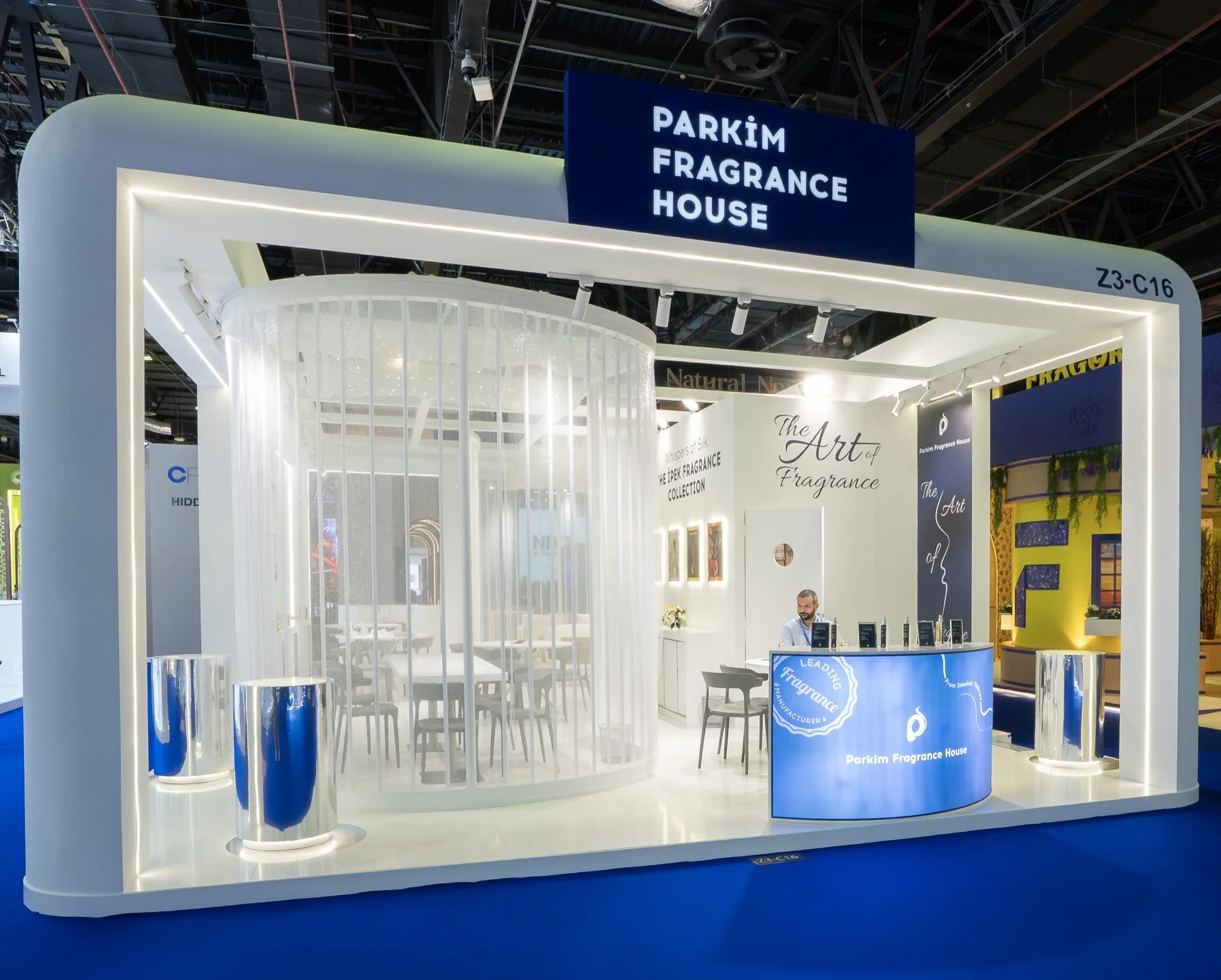
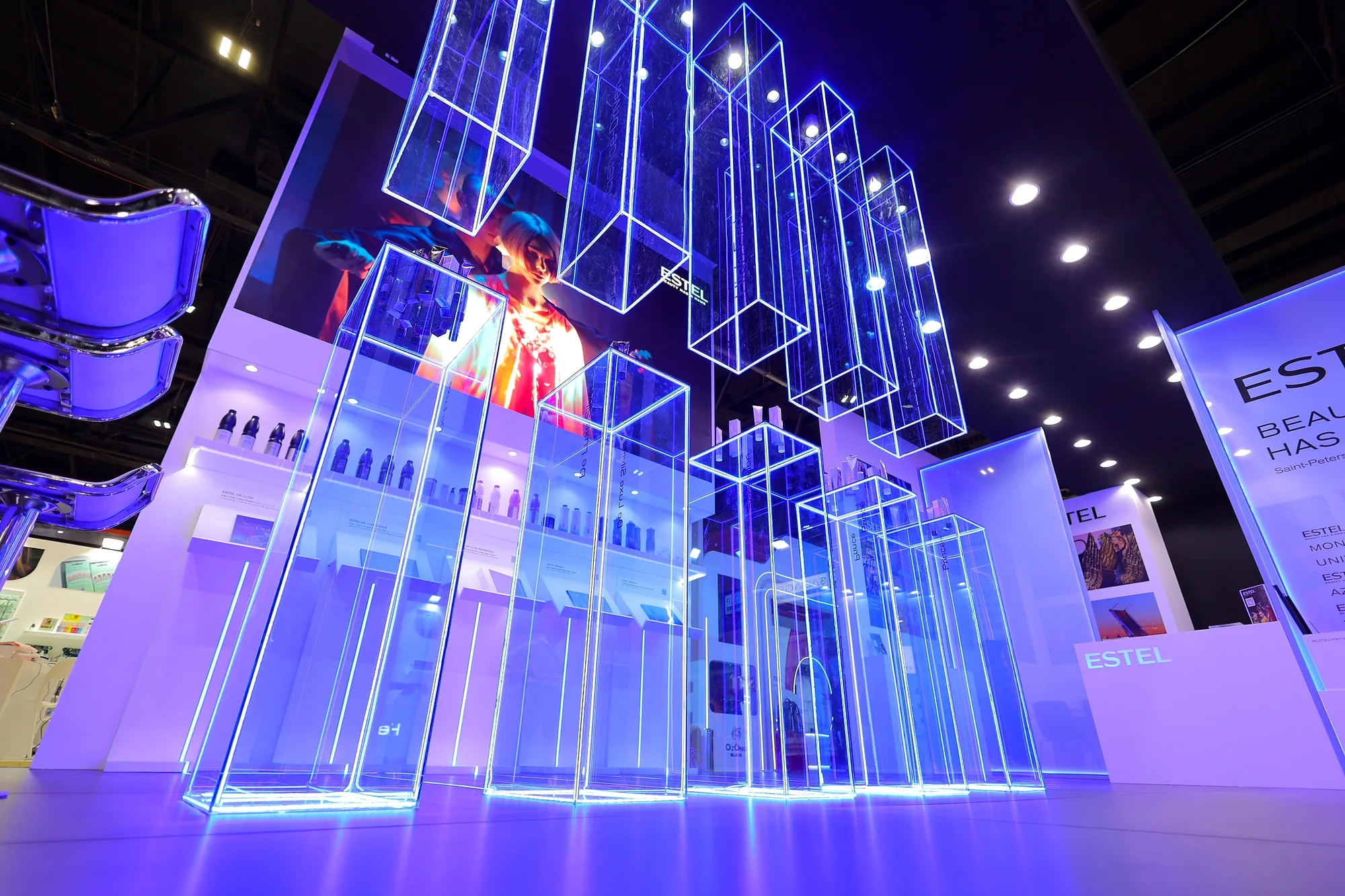
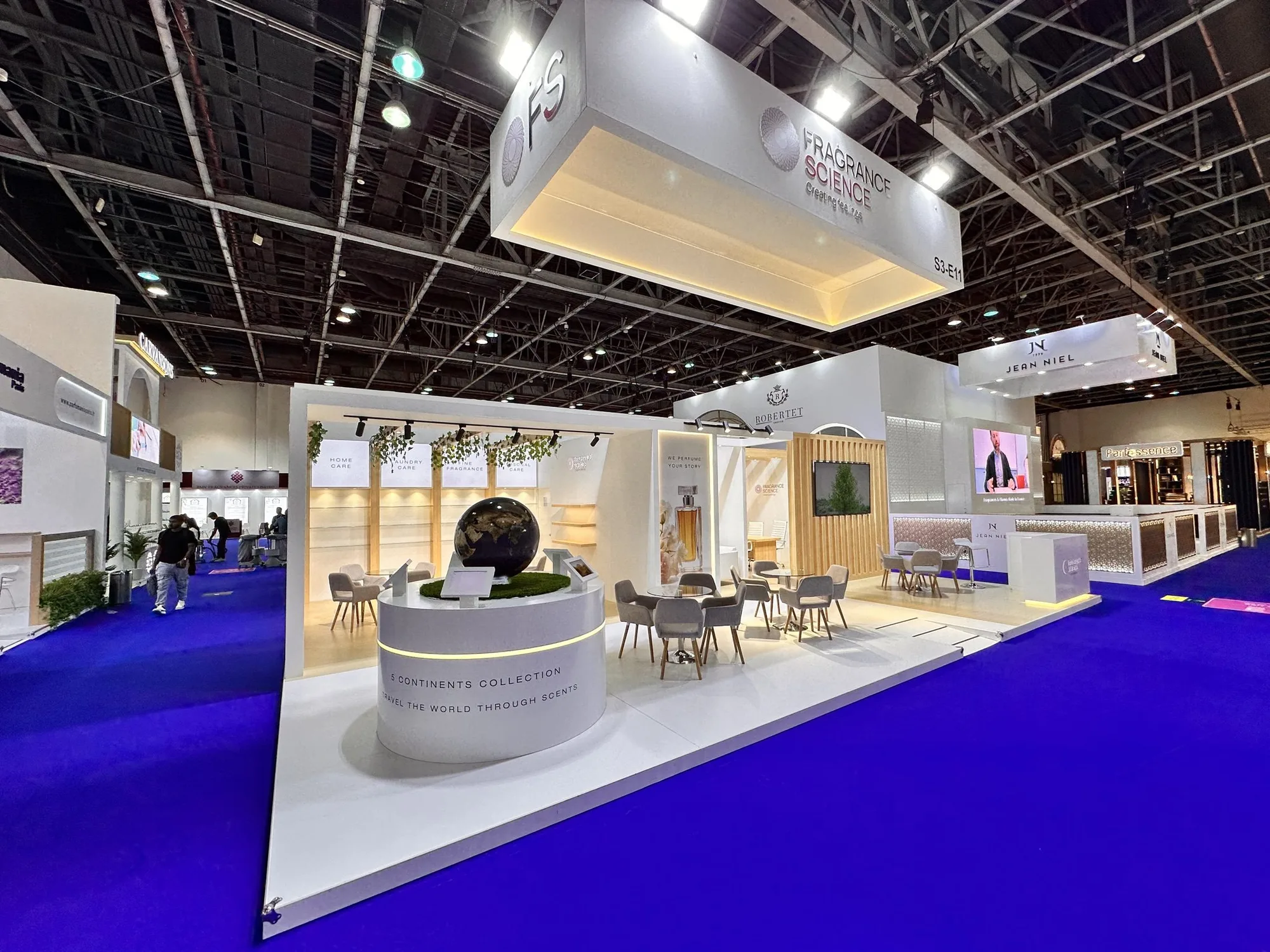
Parkim at Beautyworld 2025 used 100 m² as a translucent fragrance house — a calm, gallery-like route through several collections, with hospitality built in rather than bolted on. ESTEL took 102 m² at the same show in 2023. Fragrance Science at 150 m² in 2024 added consultation space and digital storytelling to the same basic proposition.
The honest test for this bracket: count the people who need to be on the stand at once. Staff, plus the visitors you want seated, plus the visitors browsing while those meetings happen. If that number is above eight or so, 100 m² will feel tight by mid-morning on day one.
200 to 300 m²: parallel activity
At this size several things can happen simultaneously without colliding. That is the actual purchase — not more space, but the ability to run a demonstration, a private meeting and open browsing at the same time.
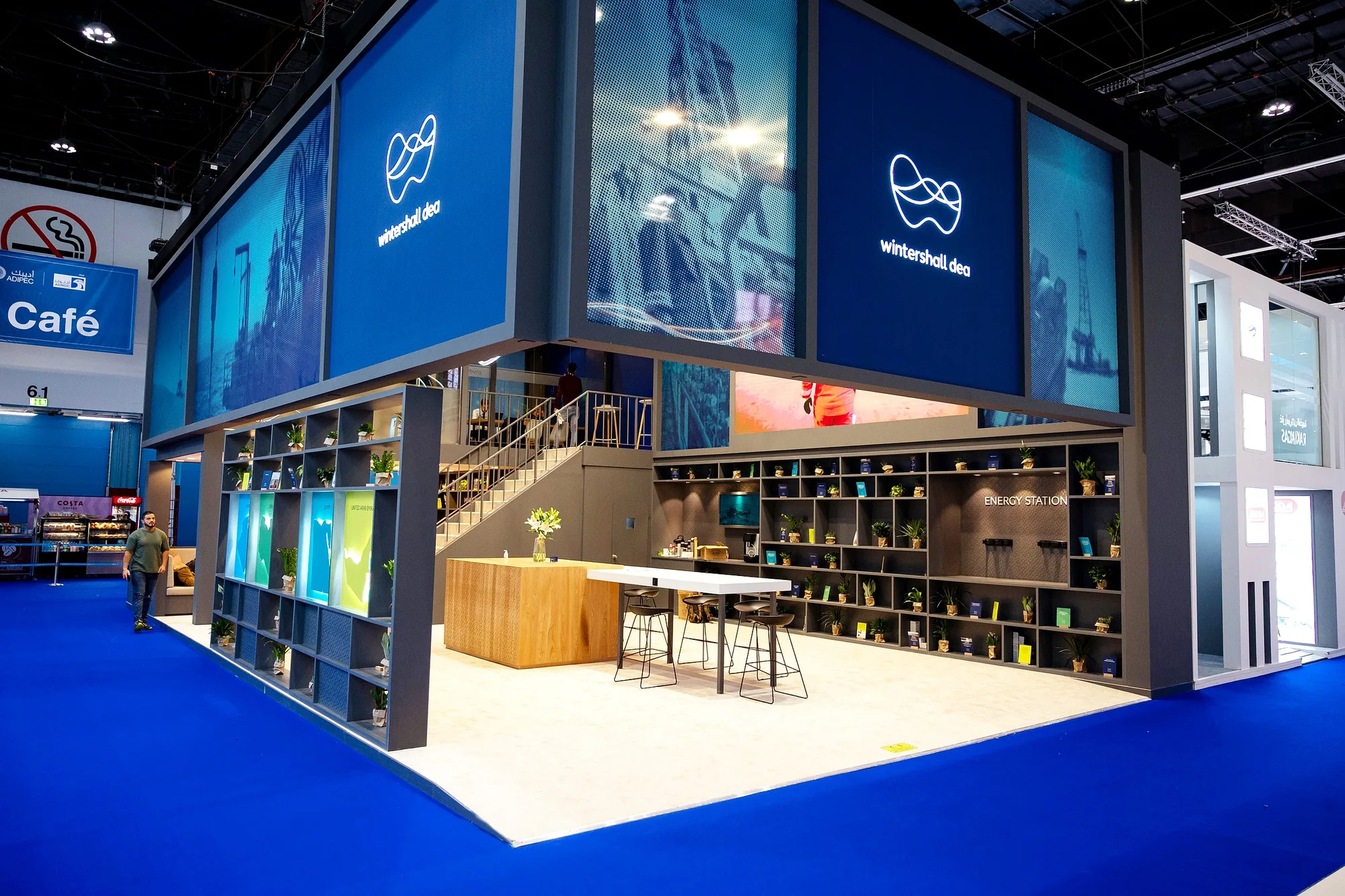
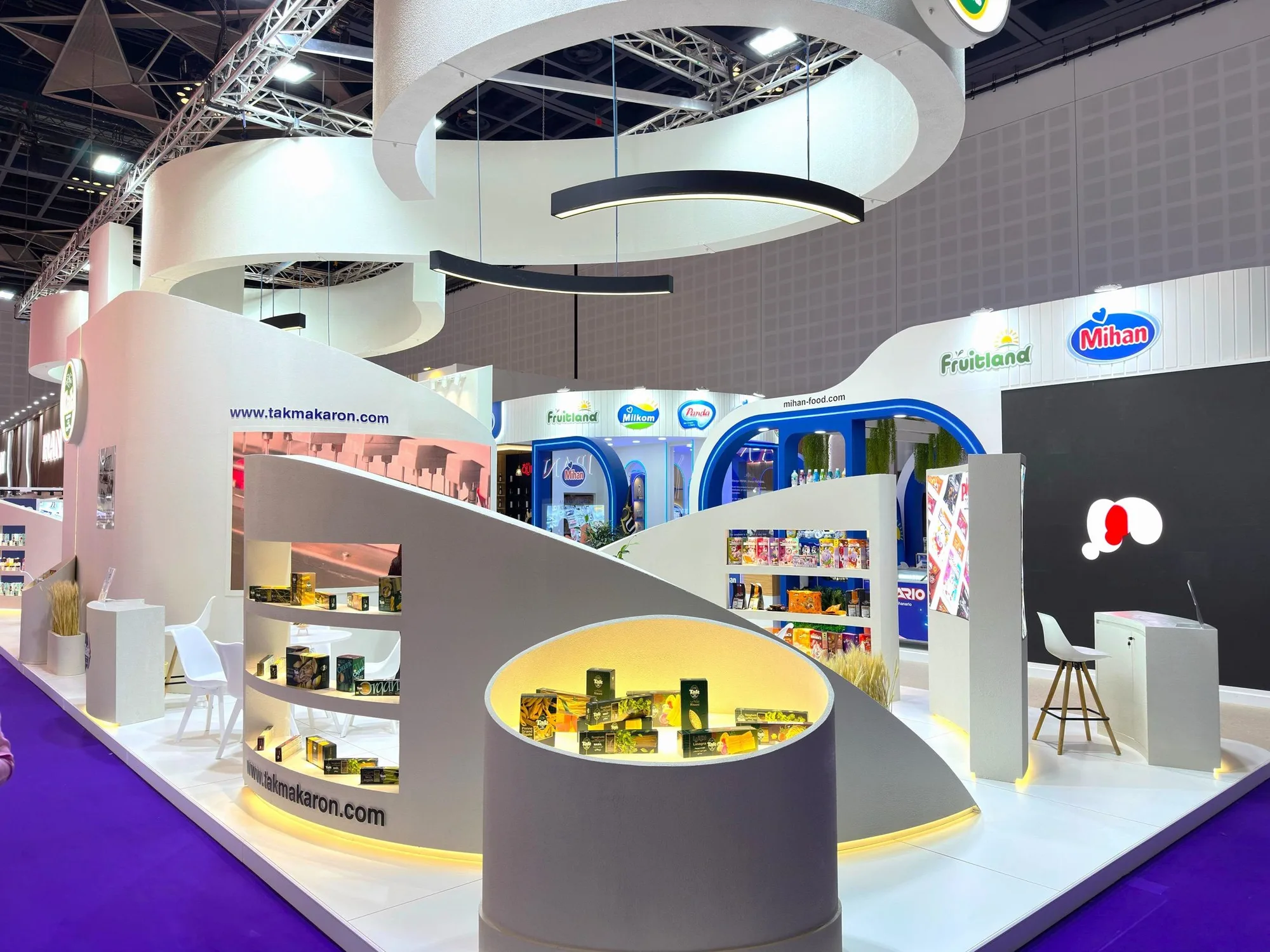
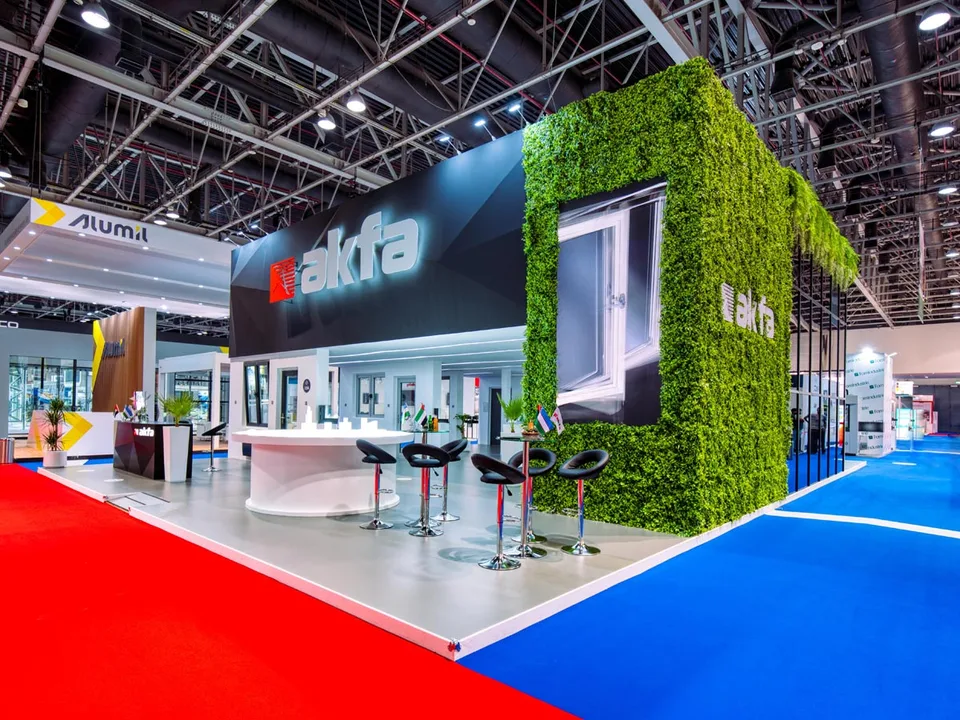
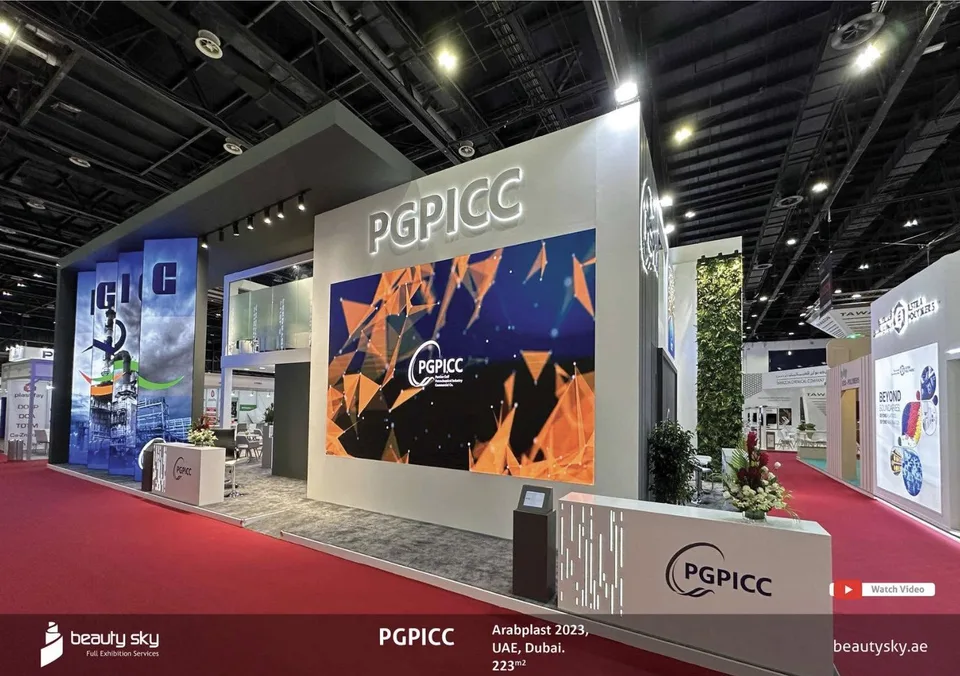
Wintershall Dea took 200 m² at ADIPEC 2022 to balance technical communication, hospitality and high-traffic flow for two different audiences, technical and executive. Tak Makaron used 200 m² at Gulfood 2025, AKFA 216 m² at The Big 5 in 2021, and Global Polymer 223 m² at ArabPlast 2023.
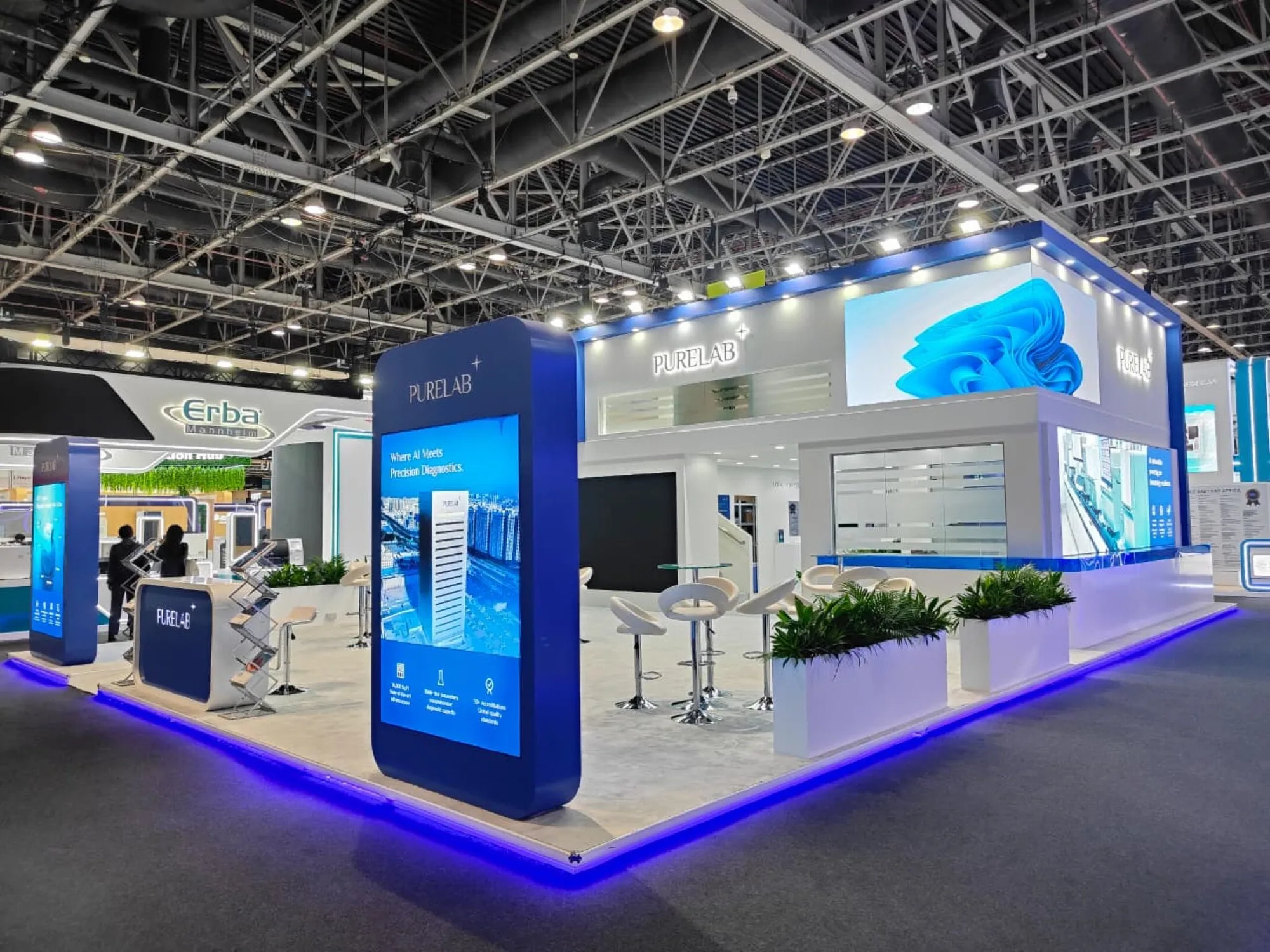
PureLab at WHX Labs 2026 shows what 300 m² adds: enough room to make a large diagnostic network legible while carrying clinical credibility, digital storytelling, hospitality and a separate wellness narrative without any of them crowding the others.
This is also where a stand starts needing a circulation plan rather than a layout. Visitors have to be able to reach the thing they came for without walking through someone else's meeting.
400 m² and above: a different discipline
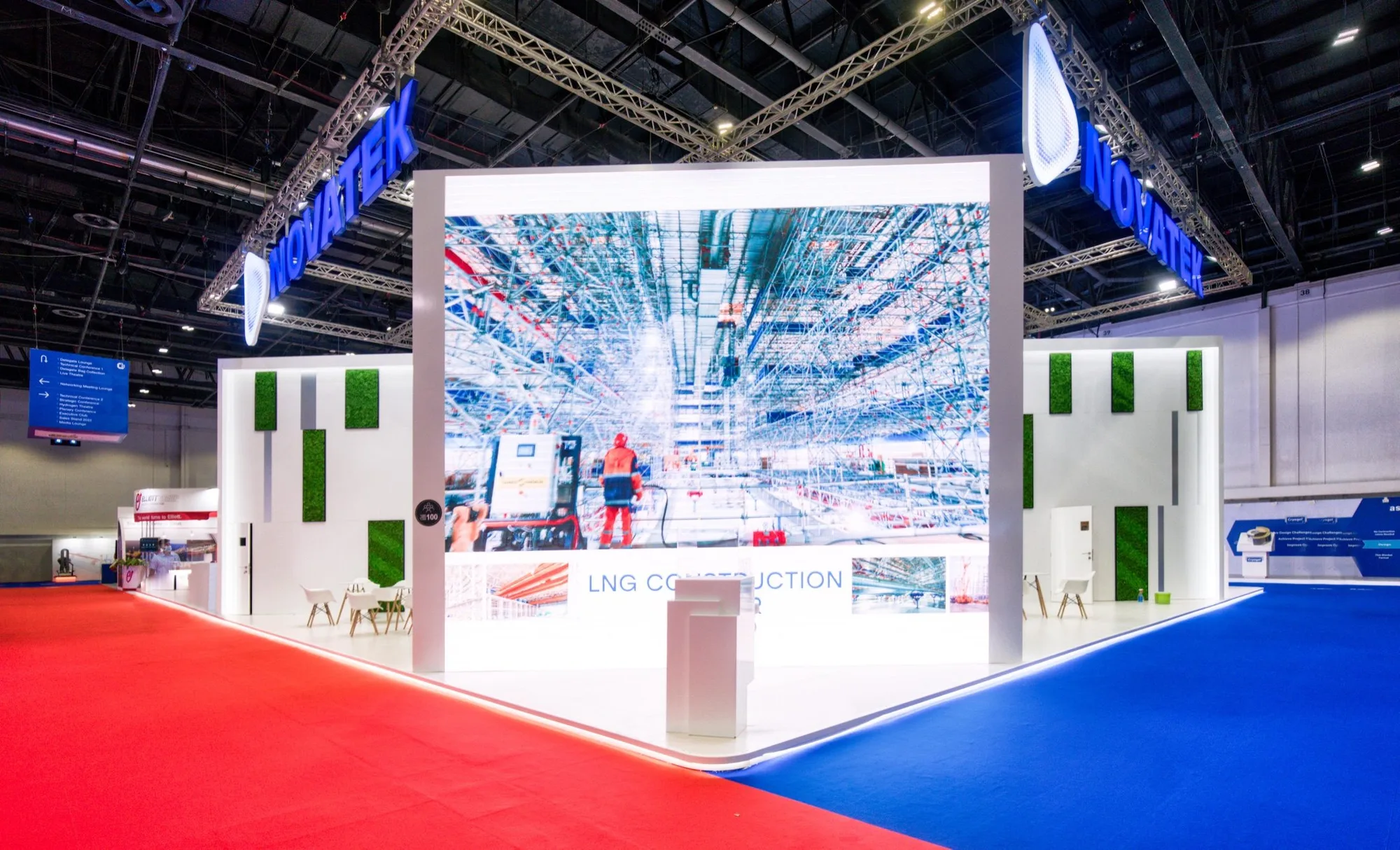
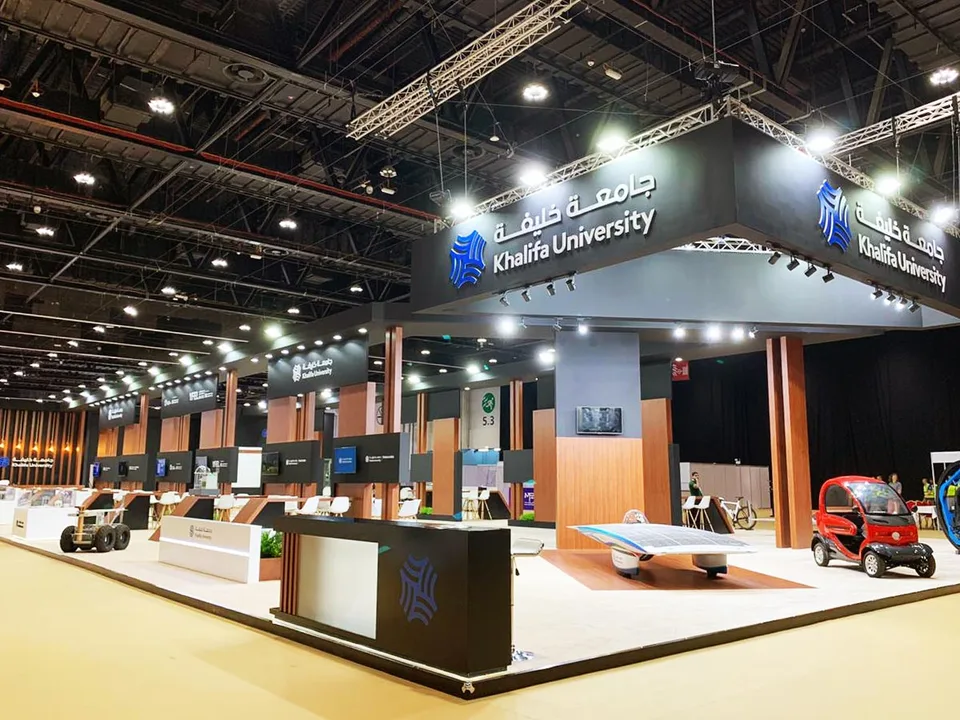
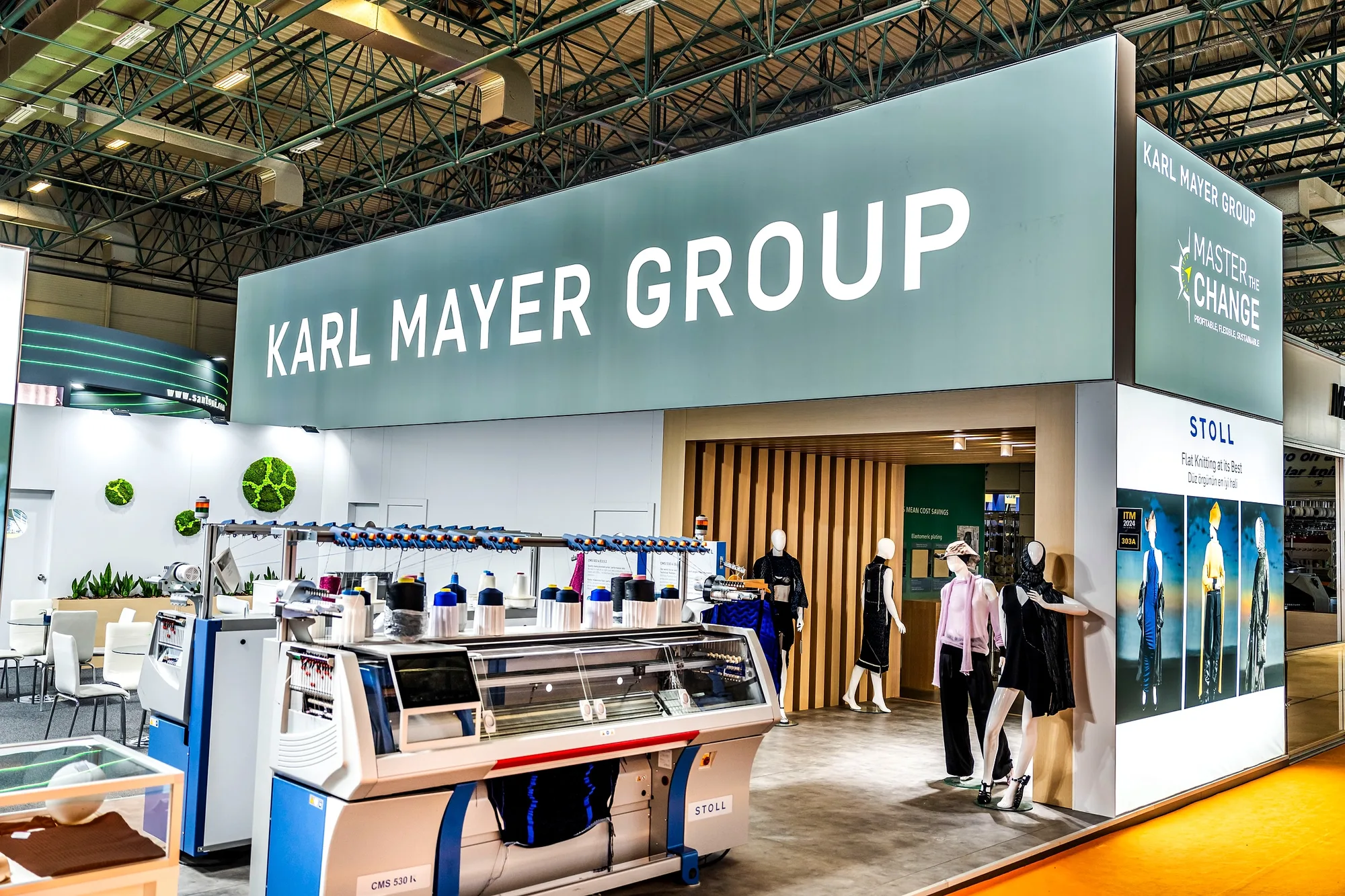
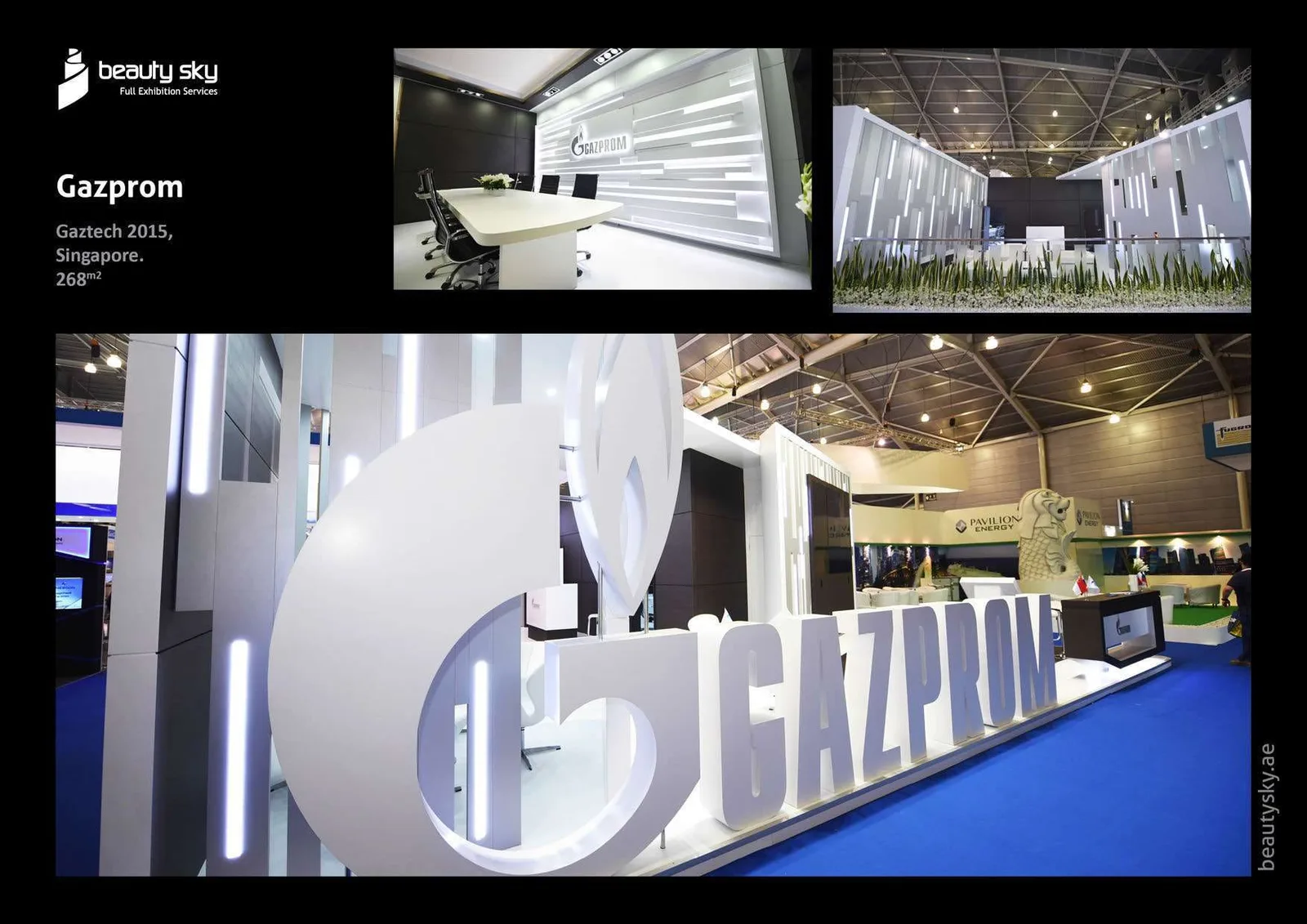
Past roughly 400 m² the problem changes from filling space to organising it. Novatek took 400 m² at Gastech 2021 and 300 m² in 2015. Khalifa University took 400 m² at the World Future Energy Summit 2020, the Moscow Pavilion 400 m² at the World Urban Forum, and Karl Mayer 450 m² at ITM in Istanbul.
At this scale sightlines matter more than square metres. A large stand that cannot be read from the aisle performs worse than a well-organised 200 m², because visitors cannot tell from outside whether it is for them.
Pavilion scale: many exhibitors, one address
National pavilions are a separate category, not simply large stands. The design problem is giving each participating company a legible frontage while the whole reads as one national platform.
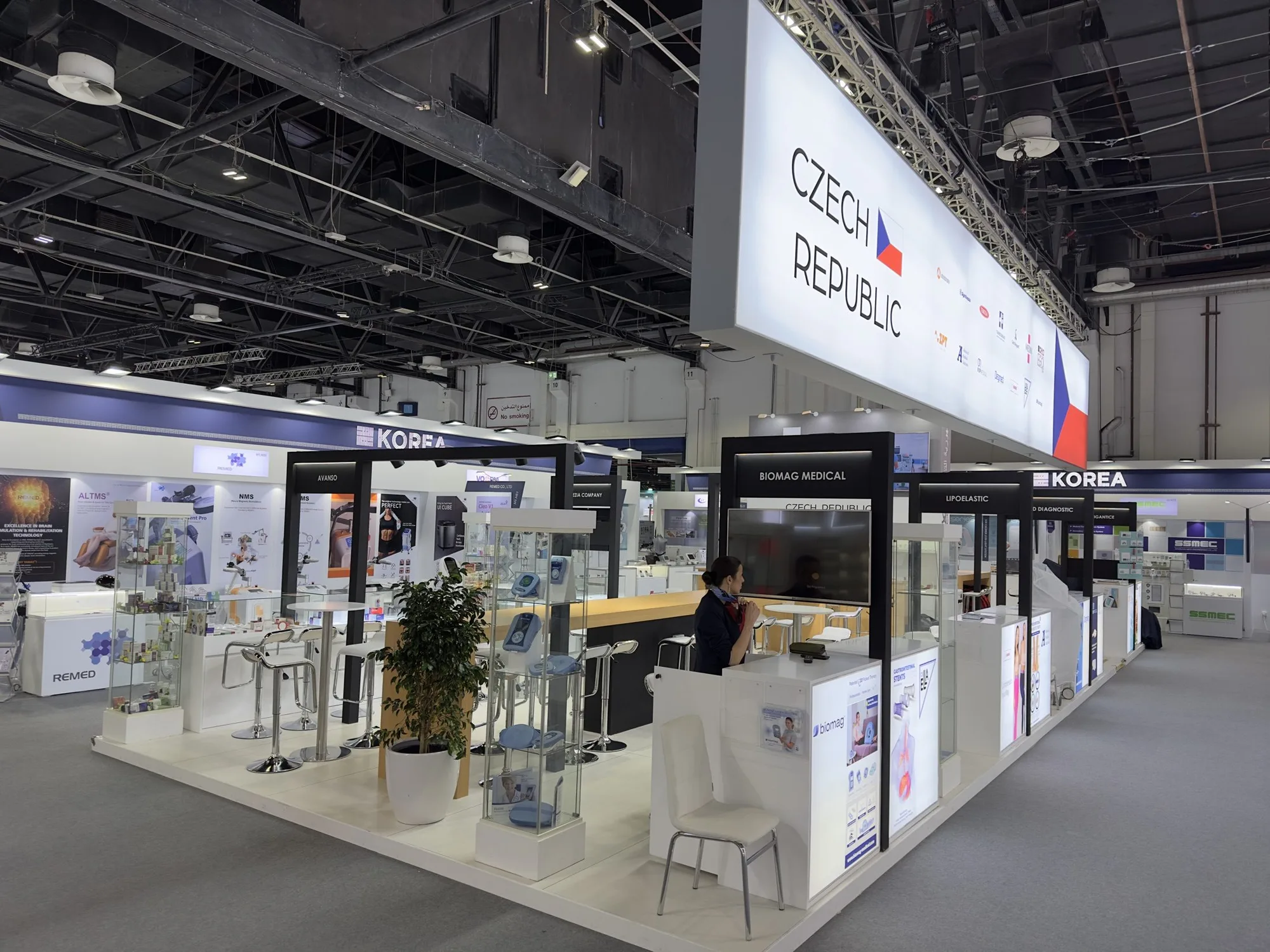
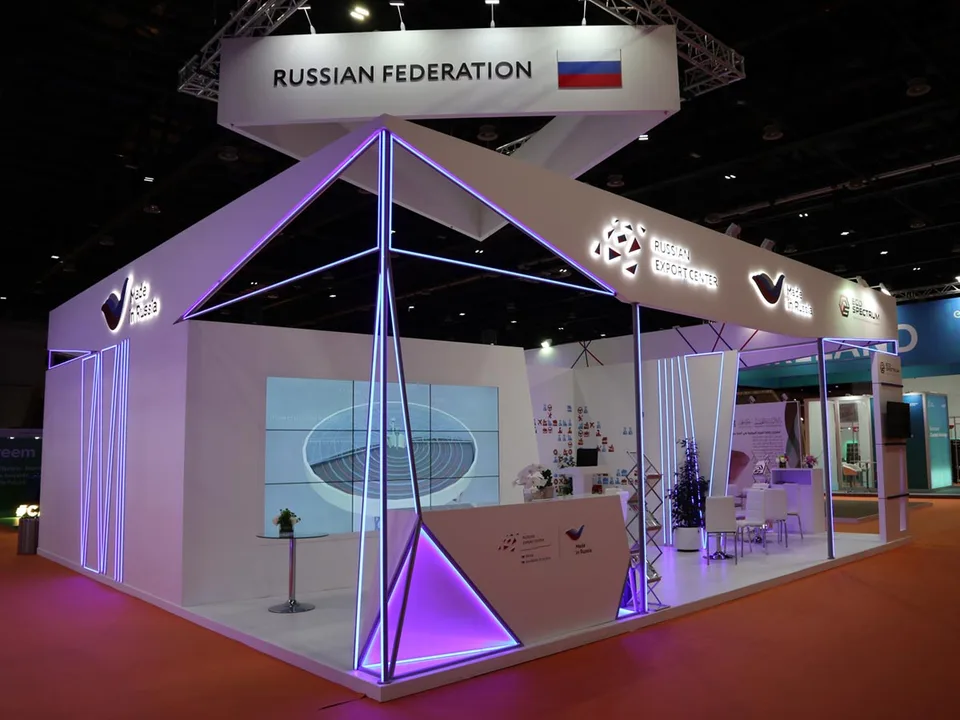
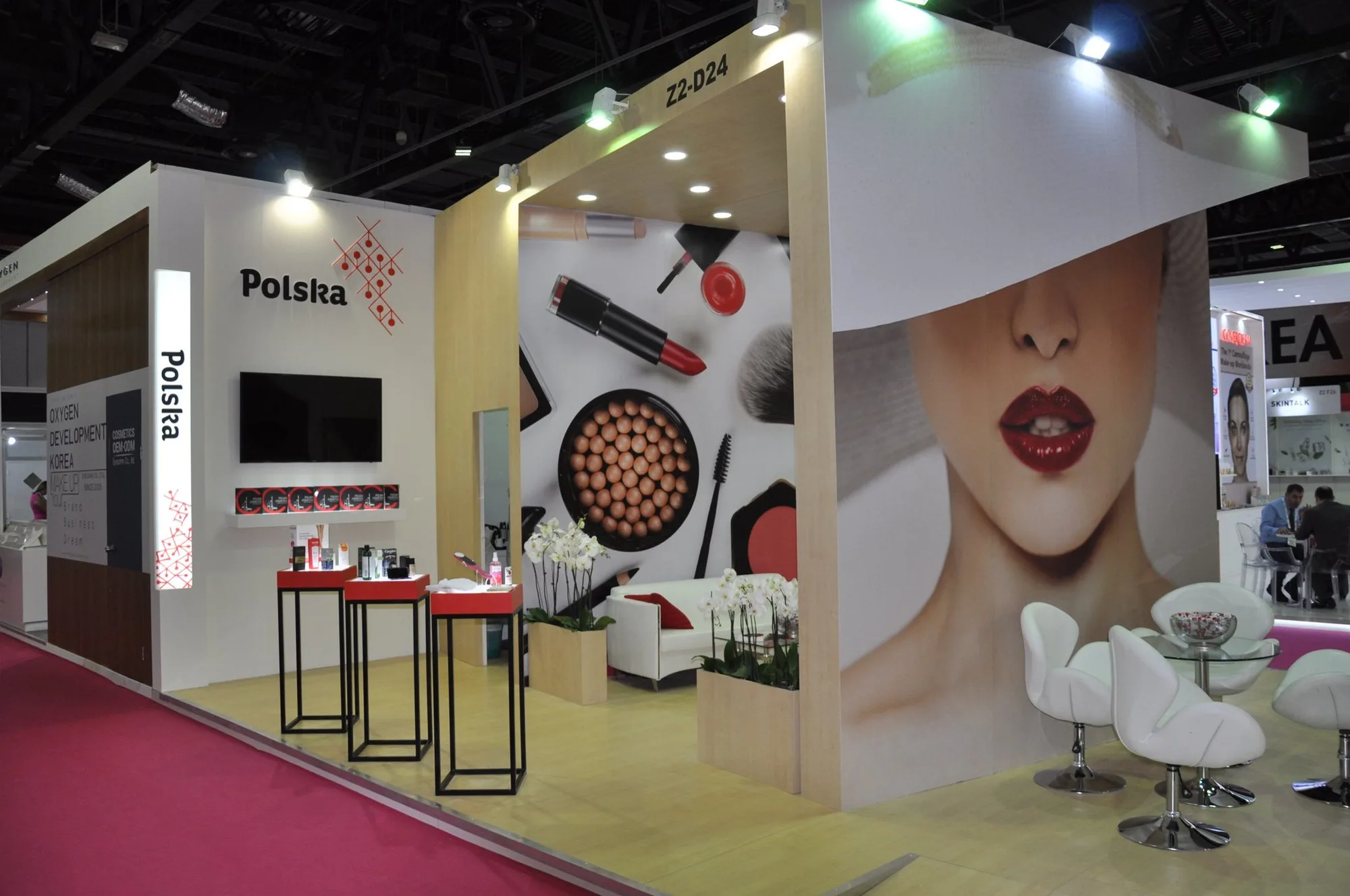
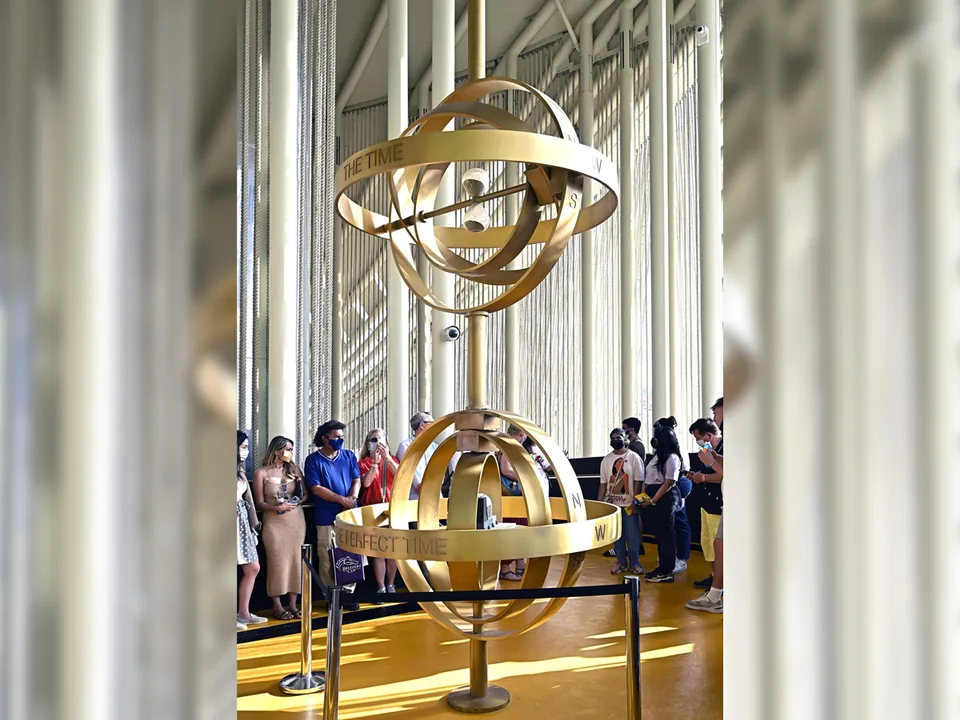
The Czech Republic Pavilion at Arab Health 2024 did that across 230 m² for multiple medical-technology exhibitors. The Russia Pavilion at Arab Health 2019 took 220 m², Poland 480 m² at Beautyworld 2023, and the Italy Pavilion Atomic Clock at Expo 2020 occupied 654 m².
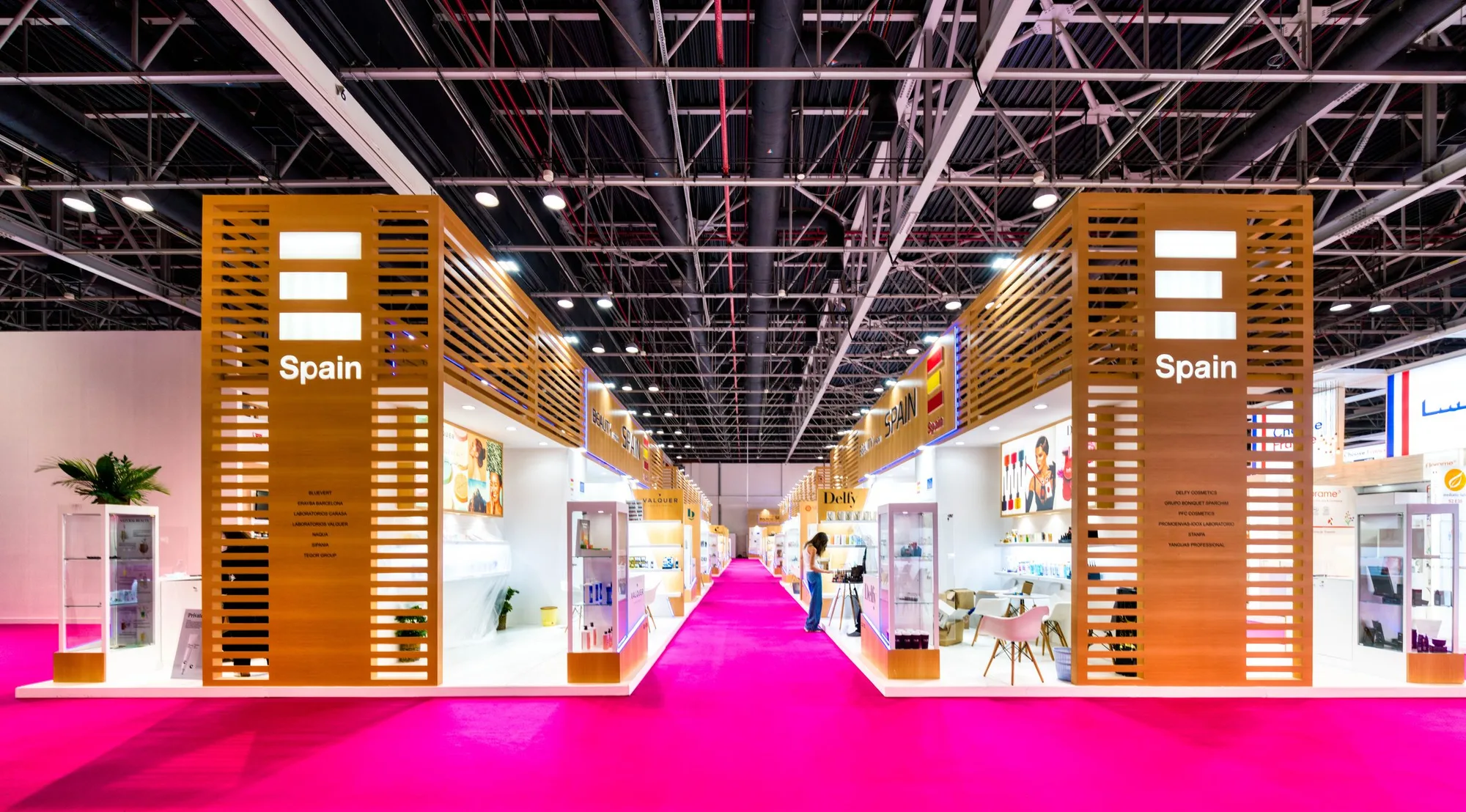
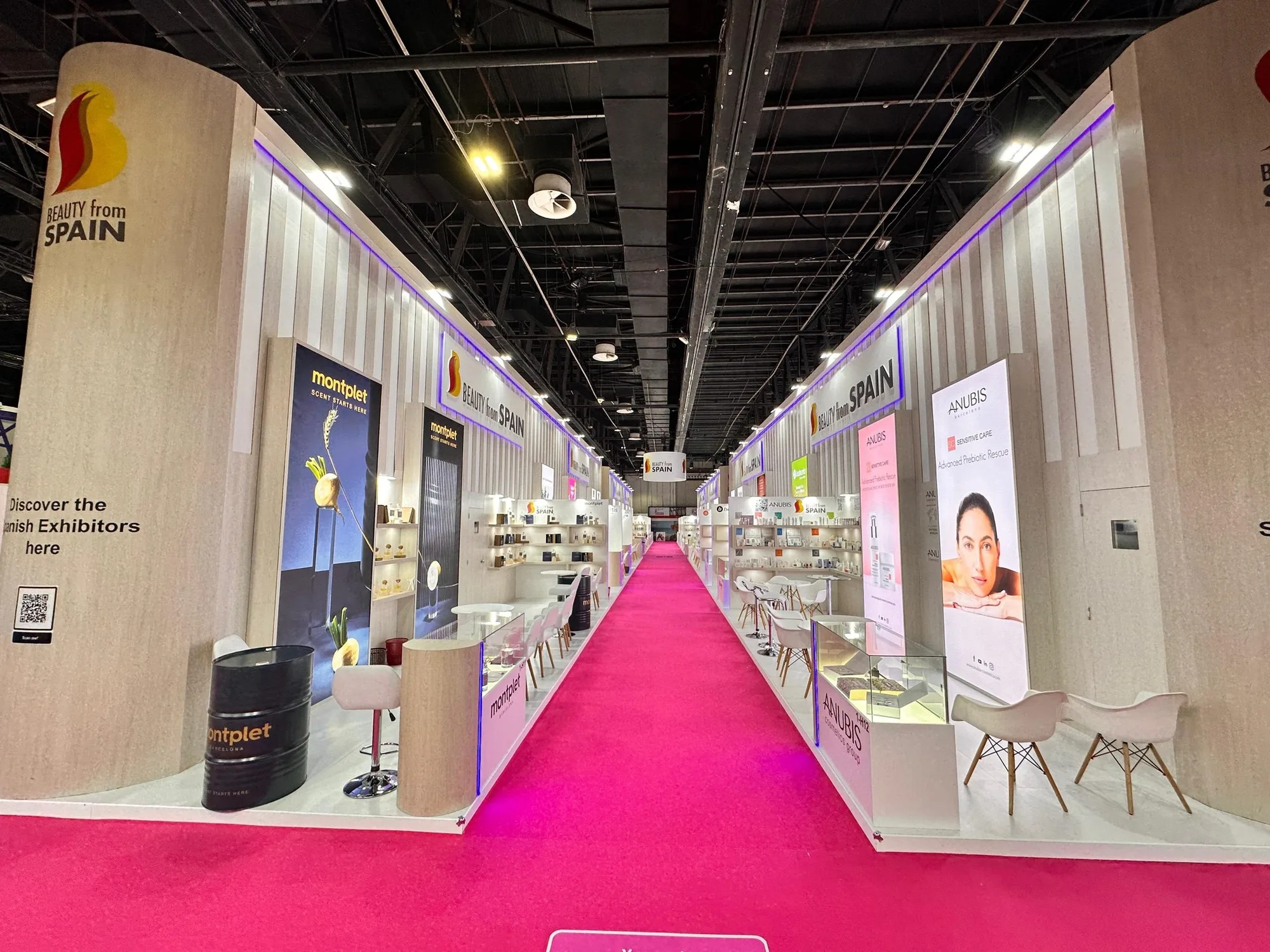
The Spain Pavilion at Beautyworld 2021 is the largest in the record at 1,200 m² — a national beauty programme planned as a navigable marketplace, where wayfinding and individual brand frontages mattered more than any single architectural gesture.
The question that sets the number
Not “how big should the stand be” but “how many conversations do we need to hold at the same time, and how private does each need to be?” Answer that and the bracket picks itself.
One conversation at a time, in the open: under 100 m². Two, one of them seated: 100 to 150. Three or more in parallel, one of them private: 200 to 300. A programme of scheduled meetings alongside open traffic: 400 and up.
Work it out from the meeting schedule you expect on day two, which is usually the busiest. It is a more reliable input than last year's number, and it is the one a builder can actually design against.
Before you ask for a quotation
Three things make a stand-size conversation productive. The number of staff on the stand at peak. Whether any meeting needs to be genuinely private, with a door rather than a screen. And whether anything physical has to be displayed — machinery, sample walls and heavy product change the calculation entirely, because they consume floor that cannot then be used for people.
Bring those three and the size question resolves quickly. Bring only a budget and a show name, and the number will be a guess — an educated one, but a guess.