 ← All insights
A brief is a decision record, not a wish list
A stand builder can price a drawing. What they cannot price is an ambition. The difference between a proposal that holds and one that moves twice before contract is almost always the number of decisions the brief has already settled.
The useful test is simple: could someone who has never met your team read the brief and know what has to be true on opening morning? If the answer depends on a conversation, the brief is not finished.
The six inputs that unlock an accurate proposal
Stand location and dimensions, taken from the organiser's floor plan rather than memory. Corner, island, peninsula and in-line positions produce completely different design logic, and open-side count drives both cost and visibility.
The organiser's technical manual. This governs height limits, rigging rights, platform rules, fire and material requirements, build-up and dismantle windows, and the deadlines for technical submission. It is the single most useful document you can send.
What has to happen inside the stand. Product display, live demonstration, private meetings, hospitality, storage and staff numbers each consume floor area. A 100 m² stand hosting six simultaneous meetings is a different building from a 100 m² product gallery.
Your commercial objective, stated plainly. Lead volume, distributor recruitment, existing-client hospitality and press visibility push the design in different directions, and they are not always compatible.
Reusability. If the structure has to travel to a second show, that is a design constraint from day one, not a later adaptation.
A budget range, even a wide one. Withholding it does not produce a cheaper stand — it produces a proposal aimed at the wrong bracket, and a redesign cycle you pay for in time.
Where Dubai briefs lose time
Late technical submission is the most common and most expensive failure. Venue approvals sit on a fixed calendar that does not flex because a client approval was slow, and a design that clears the submission deadline by days leaves no margin for a structural query.
The second is treating rigging as a detail. Suspended elements, overhead identity and lighting rigs depend on venue rights, hall structure and load limits. When a hanging banner is assumed rather than confirmed, the fix usually arrives as a ground-supported structure that eats floor area.
The third is power and data specified after the design is frozen. Demonstration equipment, LED walls, refrigeration and coffee service all draw load, and retro-fitting supply routes through a finished stand is disruptive rather than impossible.
What a complete brief makes possible
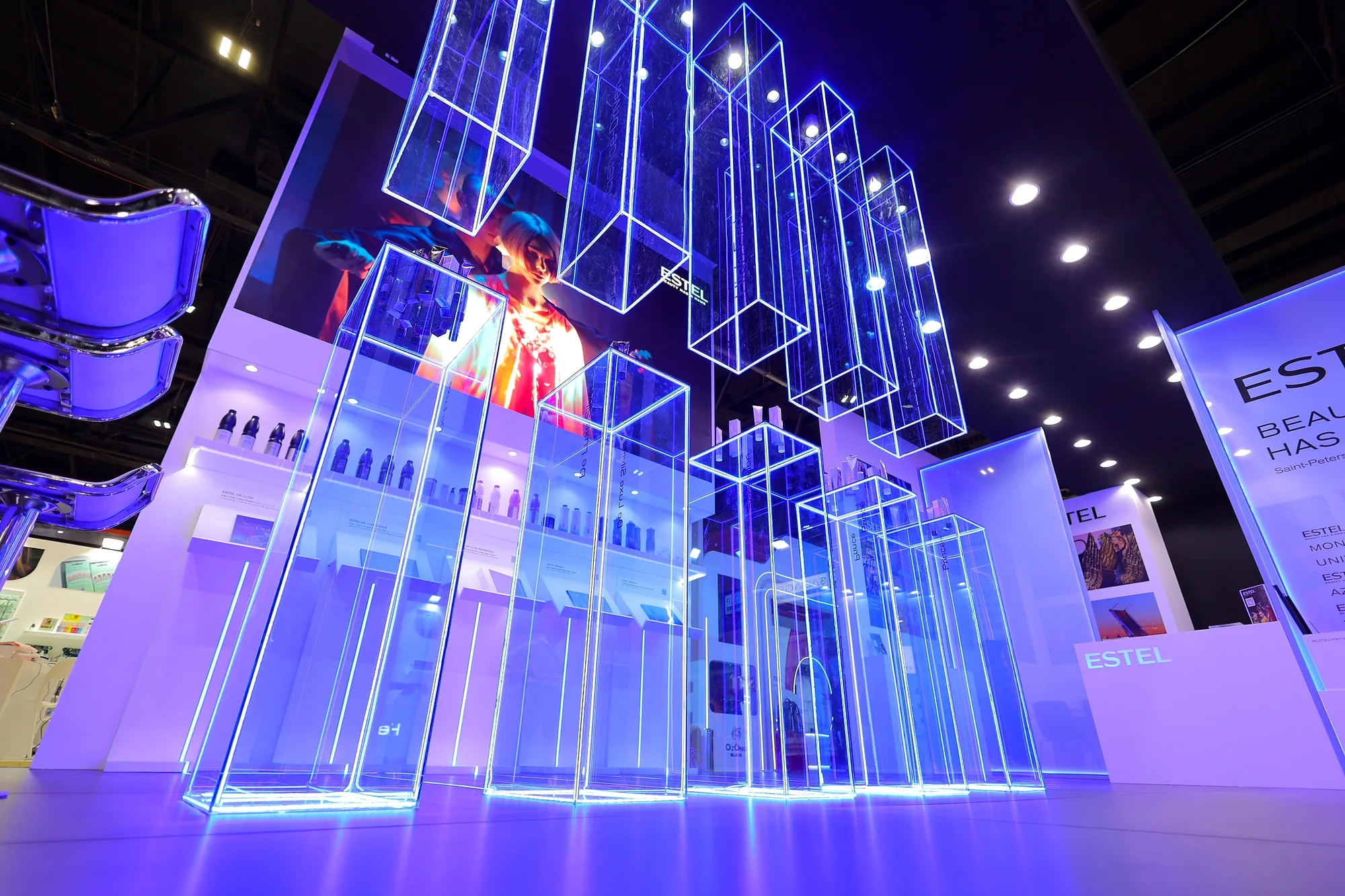
The delivered work that reads as effortless usually reflects a brief that resolved these questions early. At Beautyworld Middle East, the ESTEL environment used illuminated transparent volumes and a clear architectural axis to stay legible from several approaches across a dense hall — a decision about sightlines that had to precede fabrication, not follow it.
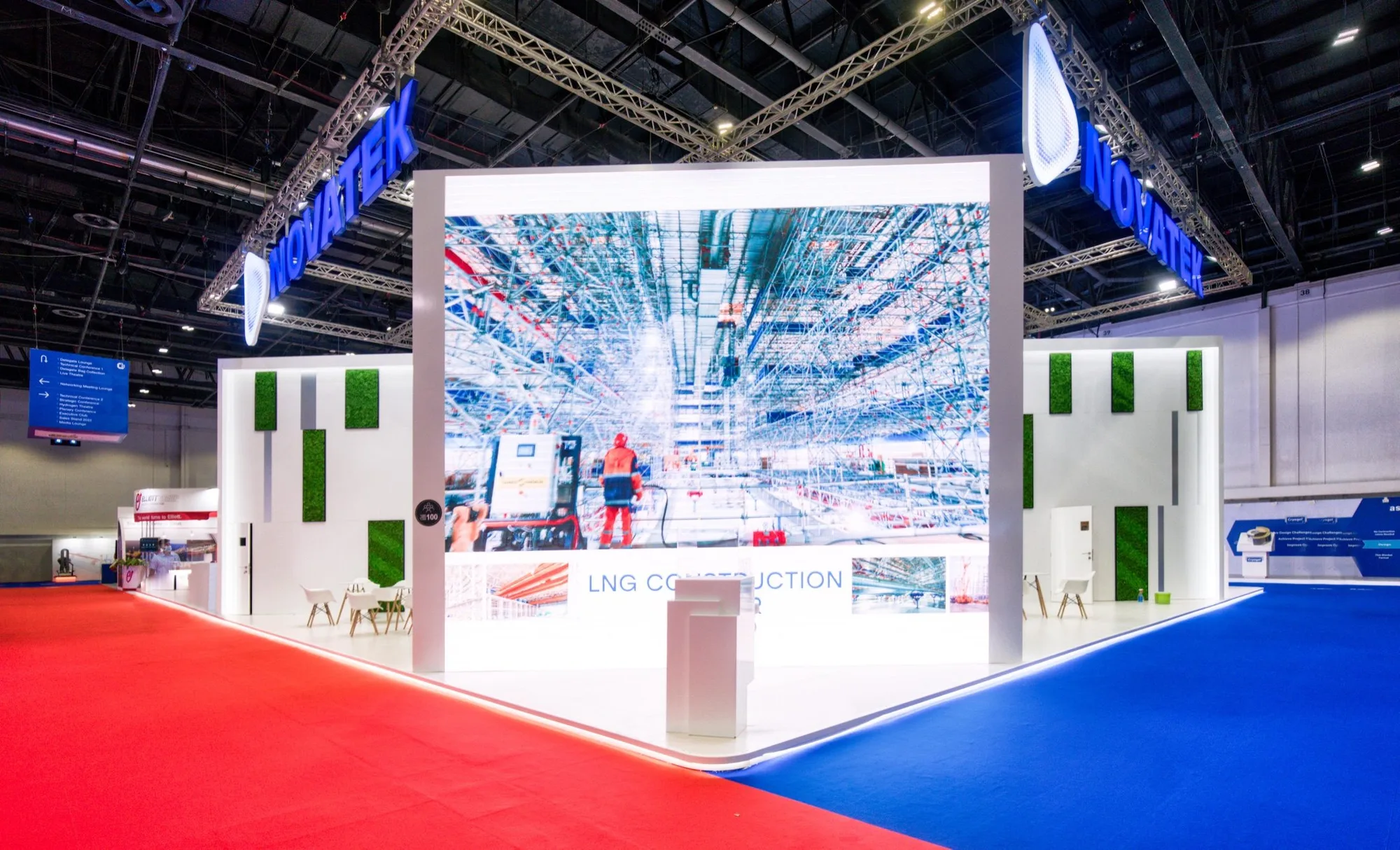
At Gastech, the 400 m² Novatek stand combined a central storytelling volume with fitted boardrooms, because the requirement for private high-level meetings was established as a spatial need at brief stage rather than accommodated later.
Neither outcome depended on a larger budget. Both depended on knowing, before design began, what the space had to do.
Five questions to ask any Dubai stand contractor
Who owns the technical submission, and on what date will it be lodged?
Is fabrication in-house or subcontracted, and where will our stand actually be built?
Who is on site during build-up, and who has authority to make a decision at 2am?
What happens to the structure after dismantle — storage, reuse, or disposal?
Which parts of this quotation are provisional, and what would change them?